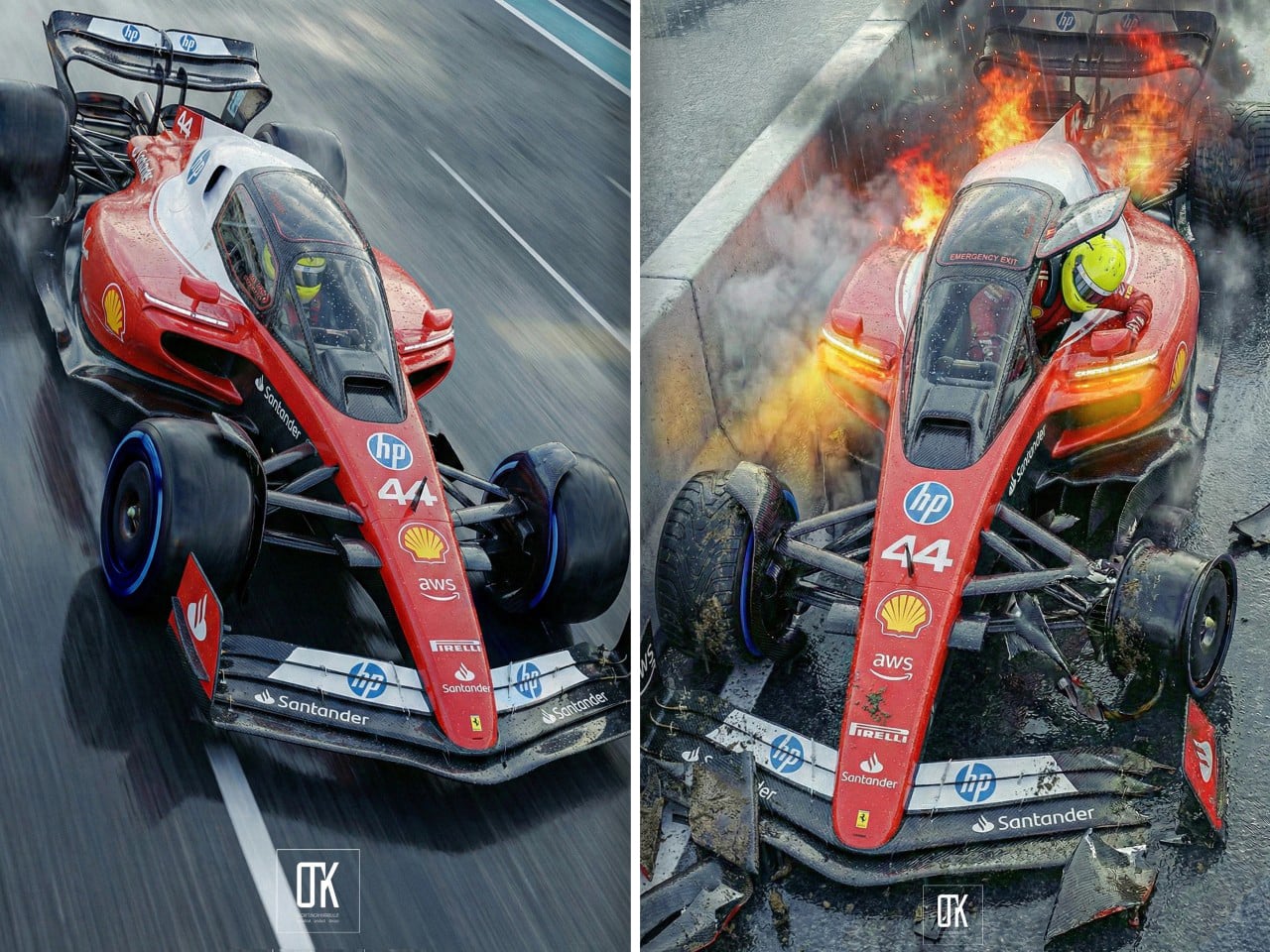
In the pursuit of improving driver safety in Formula 1, designers have introduced a revolutionary 'Closed Cockpit' concept that reimagines the traditional Halo safety device. This innovative design envisions a fully enclosed canopy that offers a safer alternative to the current open cockpit with the Halo structure.
The concept aims to address the limitations of the existing Halo system, which, while effective, still leaves drivers exposed to debris and potential impacts. The enclosed canopy would serve as a protective barrier, shielding drivers from flying debris, side impacts, and other hazards encountered on the track.
Developed by automotive safety designers, the 'Closed Cockpit' concept features a sleek, aerodynamic shell that seamlessly integrates with the car's body. Made from lightweight yet durable materials, the canopy maintains visibility and does not compromise the car's performance or speed. The design also incorporates advanced safety features, such as reinforced edges and impact-absorbing zones, to ensure maximum protection during crashes.
One of the key advantages of this design is its potential to significantly reduce injuries caused by debris or collisions. By enclosing the driver within a protective shell, the risk of head and upper body injuries could be minimized, aligning with ongoing efforts to improve safety standards in motorsport.
However, implementing such a system poses technical challenges, including ensuring quick and reliable ingress and egress for drivers, as well as maintaining effective ventilation and communication systems. Engineers are exploring solutions like rapid-release mechanisms and integrated communication interfaces to address these concerns.
While still in the conceptual stage, the 'Closed Cockpit' offers a glimpse into the future of racing safety technology. As Formula 1 continues to innovate, such designs could become standard, providing drivers with a safer environment without sacrificing the excitement and speed that make the sport thrilling.
Overall, this concept represents a significant step forward in the evolution of driver protection, potentially transforming the look and safety of Formula 1 cars in the years to come. As safety remains a top priority, the industry will be watching closely to see if these ideas can be realized into real-world applications.